
Shopping Cart
Best sellers

starting from
Regular price
€1.464,00
Price on demand
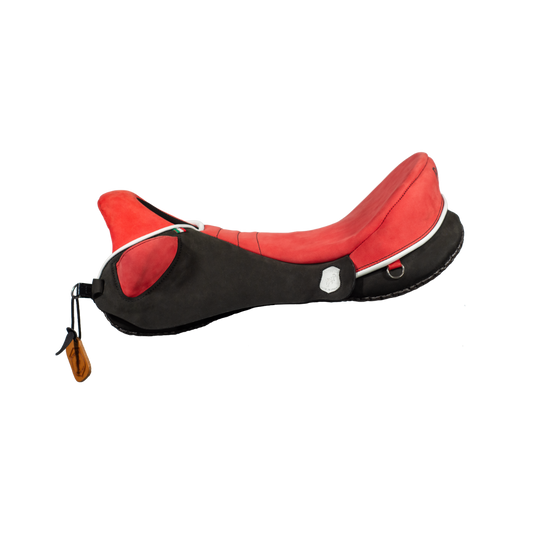
starting from
Regular price
€2.170,00
Price on demand
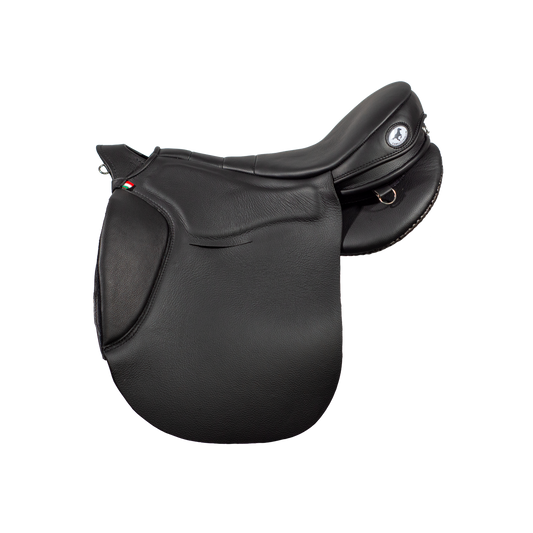
starting from
Regular price
€1.208,00
Price on demand


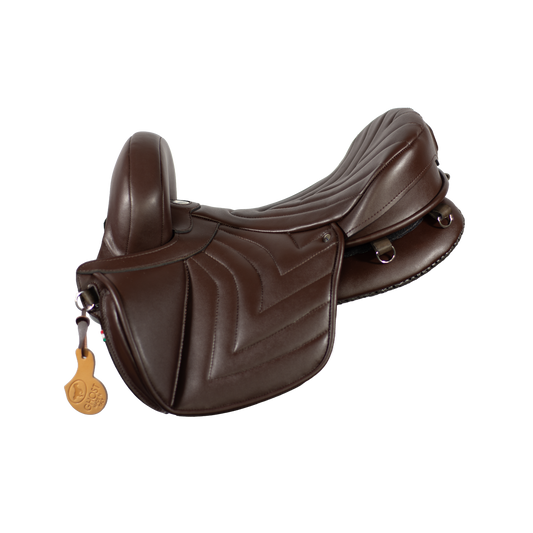
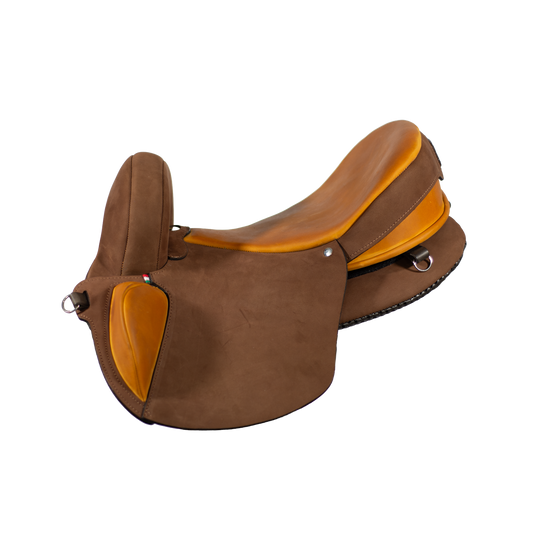
Ghost Ferrara Soft Mohawk Saddle
starting from
Regular price
€1.104,00
Price on demand
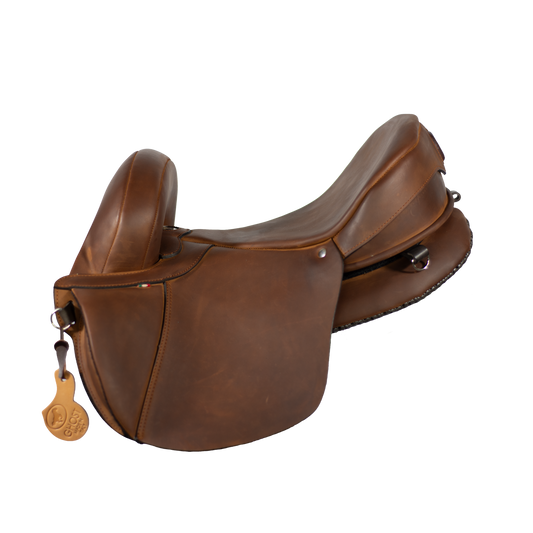
starting from
Regular price
€1.013,00
Price on demand
starting from
Regular price
€961,00
Price on demand
starting from
Regular price
€1.451,00
Price on demand

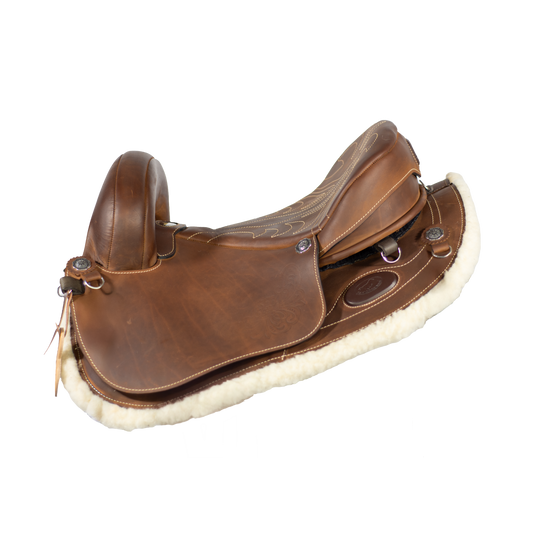
Ghost Mohawk Butter Soft Saddle
starting from
Regular price
€1.316,00
Price on demand
Key features of the Ghost Mohawk
The Ghost Mohawk line was created to offer the rider a more pronounced front reference point and a greater sense of security, while maintaining the flexibility and modularity typical of the Ghost system.
The element that truly distinguishes the Mohawk from the other Ghost lines is the Mohawk front pommel, integrated into the saddle base. Its shape creates a more noticeable reference point in front of the rider without taking up the seat space, as happens in models characterized by a very deep, enclosing seat.
The Mohawk can therefore be particularly interesting for those seeking greater security on descents, uneven terrain and long rides, without giving up the freedom of movement and close contact characteristic of Ghost saddles.
The line also retains the possibility of configuring various saddle elements - including tree, panels, rigging, stirrup leathers or fenders, materials and finishes - according to the needs of horse and rider.
Mohawk pommel and seat compatibility
The Mohawk pommel is not simply an aesthetic element or an accessory applied to the saddle: it is part of the Mohawk base.
This feature has an important consequence for the system's modularity: seats designed for the Mohawk configuration must be used on the Mohawk base. A standard Ghost seat of the same size is therefore not automatically compatible with a Mohawk base.
This is something to consider both when purchasing and if, over time, you wish to modify or replace the seat.
Why choose a Ghost Mohawk
The Ghost Mohawk is primarily designed for riders who want a more prominent front reference point than the more open Ghost configurations, without necessarily switching to an extremely deep seat.
It may be an interesting choice if you:
- are looking for a greater sense of security and stability in the saddle;
- frequently ride through descents, uneven terrain or technical routes;
- spend many hours in the saddle during trail riding, trekking or trail rides;
- want a more noticeable front reference point without excessively sacrificing the space available in the seat;
- want to retain the ability to choose the model and leg configuration best suited to your position.
The presence of the Mohawk pommel mainly concerns the relationship between saddle and rider. It does not, by itself, determine whether the saddle is suitable for a particular horse's conformation.
Ghost Mohawk or Ghost Classic?
The difference between Ghost Mohawk and Ghost Classic is not simply aesthetic.
The Ghost Classic retains a more open and traditional front, while the Ghost Mohawk introduces a structured front pommel, designed to offer the rider an additional reference point.
The Mohawk may therefore be preferable if you are looking for more front support and a greater sense of security. A Ghost Classic may instead be more suitable if you prefer a more open and minimalist feeling in front of the seat.
However, this choice does not replace the choice of the individual model. Quevis Mohawk, Ferrara Mohawk and the other available configurations retain different characteristics in terms of flap shape, leg support and rider position: the Mohawk pommel adds a front security element, but it does not make the different models identical.
When the Ghost Mohawk might not be the ideal choice
The Mohawk might not be the most suitable configuration if:
- you prefer a very open seat with the minimum possible reference point in front of the pelvis;
- you want to use an existing standard Ghost seat without limitations;
- you do not want any additional front support;
- you are primarily looking for a very deep, strongly enclosing seat: in this case, it is useful to compare the Mohawk with Ghost models specifically designed to offer this type of feel.
Model and horse fitting: two different choices
The choice of the Mohawk line and individual model mainly concerns the rider's position, support and preferences.
Fitting the saddle to the horse, on the other hand, requires evaluating the overall configuration: tree, panels, rigging, shims, saddle position and balance.
For this reason, a Ghost Mohawk should not be chosen simply because the horse is “round”, “withered”, has “wide shoulders” or a “difficult conformation”. These characteristics must be assessed through saddle fitting for the individual horse.
The correct configuration therefore arises from combining two requirements: choosing the model and support best suited to the rider and configuring the saddle structure according to the horse.