
Shopping Cart
Equestrian Saddle Care & Maintenance Guide
Ghost and Purosangue saddles are not traditional saddles. Their modular structure and cutting-edge materials require specific care. Proper maintenance ensures that the base maintains its elastic flexibility in the case of Ghost saddles, and the quality of the paint and leather in the case of Purosangue saddles, preserving its natural grip.
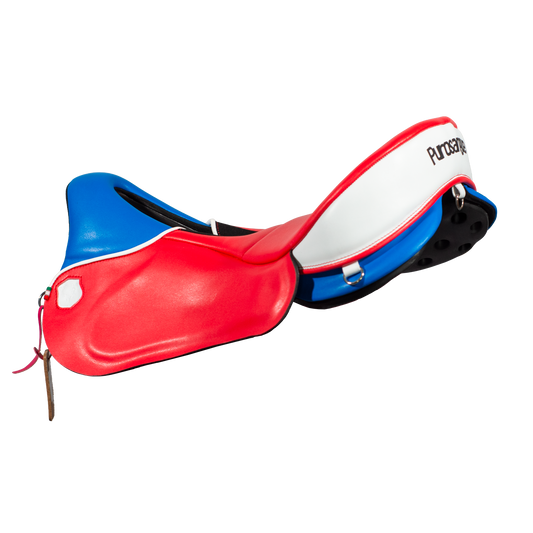
Preserve the technology and craftsmanship of your Ghost saddle and Purosangue
1. The Heart of the Saddle: Trees and Structures
Unlike common saddles, here the structure is the key to comfort.
- Ghost Saddles (Flexible Tree): The Ghost base is available in four degrees of flexibility (Cavallin/bareback, Flex, Semi-Flex, Standard). To preserve its integrity, never fold the saddle "like a book" with excessive force and never store it with weights on top. Use a tubular saddle rack that supports the panels evenly.
- Purosangue Saddles (Rigid Tree): The Purosangue structure is designed for long distances. Although it is more rigid, maintenance focuses on the mounting points: regularly check that the stirrup leather and girth strap screws are tightened securely. A loose screw can cause abnormal wear to the tree.
- Naked Trees (Piuma): If the tree is exposed, clean it only with a damp cloth. Avoid solvents or chemical agents that could damage the protective technical coating.
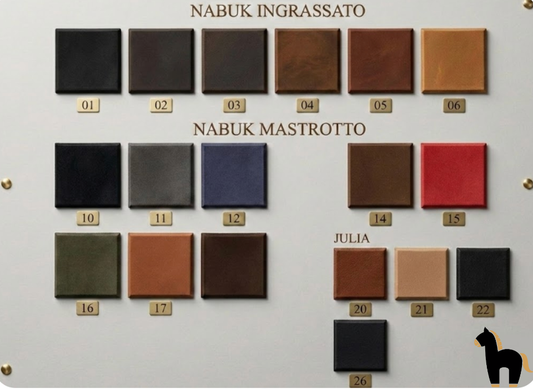
2. Leather care (Nubuck, Nappa, Julia, Mastrotto)
Leather is a natural material that evolves. Horse sweat is acidic and can "cook" the fibers if not removed.
- Nubuck (Oiled or Mastrotto): This material provides the best grip. To clean it, use a damp cloth. To hydrate it, use only oils or balms specifically for suede/nubuck. Important: Do not use too much oil on the seat, as it could stain your breeches and make the seat too slippery.
- Julia Leather: As a thick trekking leather, it requires more grease compared to thin nappa. If it feels stiff to the touch, it is a sign that the fibers are dying: apply a nourishing balm.
- Drying: If the saddle gets wet, it must dry at room temperature. Never near heaters or radiators: excessive heat crystallizes the leather fibers, causing irreparable breakage.
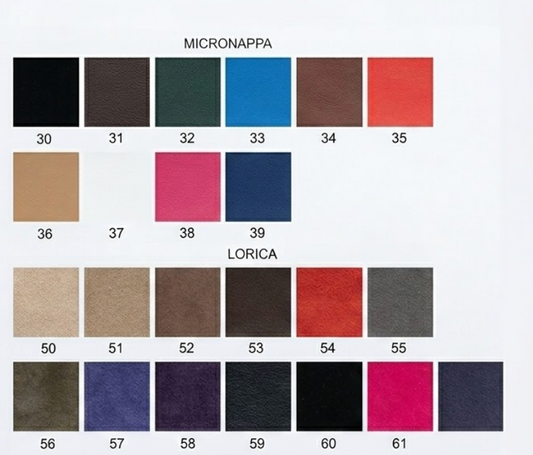
3. Synthetic and technical materials (Lorica, Micronappa, Biothane)
These materials are chosen for their longevity, but they have rules opposite to leather.
- Lorica and Micronappa: Never apply grease or oil. Being non-porous materials, grease would remain on the surface creating a sticky patina that attracts sand, which would act like sandpaper on the saddle. Clean only with water and neutral soap.
- Biothane (Fittings and Tubing): It is indestructible and water-repellent. If it accumulates dirt, just use warm water and soap. It is the only component that can be sanitized with a drop of denatured alcohol if necessary.
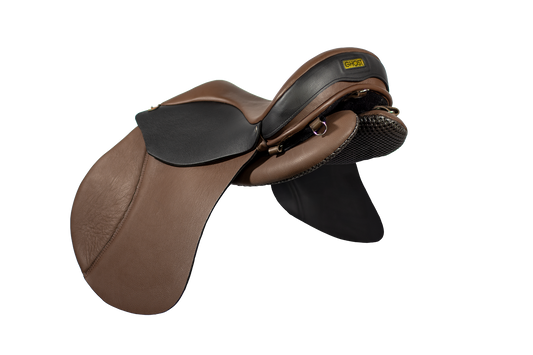
4. Maintenance of the Modular System (Velcro and Panels)
- Cleaning the velcro: The Ghost system relies on the grip of the technical velcro. At least once a month, detach the panels and remove any hay, hair, or dust with a fine-toothed comb or a stiff brush. Dirty velcro can lose up to 40% of its adhesion capacity.
- Checking the panels: Ensure that the panels are always symmetrical. The modularity allows for repositioning, but incorrect placement can create asymmetric pressure on the horse's back.
Legal notice on warranty expiration
For your safety and to maintain the 2-year warranty, please note that the coverage immediately expires if:
- Use mineral oils or solvents: These destroy the collagen in the skin and the structure of synthetic materials.
- Make structural modifications: Drilling the tree or replacing the original screws with uncertified components compromises safety.
- Neglecting the cleaning of the velcro: Incidents resulting from a shift of the saddle due to dirty or poorly positioned velcro are the user's responsibility.
- Use of aggressive cleaners: Soaps not specifically for leather can alter the pH of the materials.
Advice from Cristiana: A Ghost or Purosangue saddle is like a high-end car: it needs regular checks. Applying glycerin soap after each ride is not a duty, it is a gesture of respect towards your adventure companion and yourself.